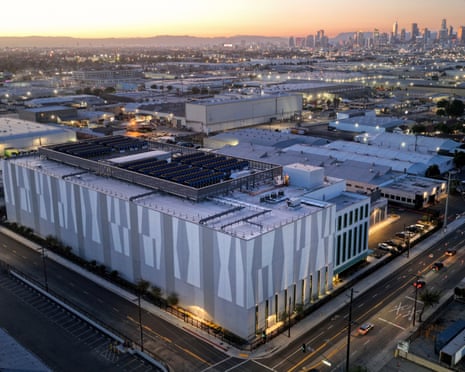
The race is very much on. Elon Musk’s SpaceX, which makes AI models as well as space rockets, announced last week it is seeking a $1.77tn (£1.31tn) valuation on the US stock market while Anthropic, the startup behind the Claude chatbot, said it had filed for an initial public offering. OpenAI, the developer of ChatGPT, is expected to follow.
This latest peak in the AI market comes amid a multitrillion-dollar spending spree on related infrastructure such as datacentres. Meanwhile, companies are attempting to deploy the technology in a way that makes investing in it worthwhile. Here’s a look at what stage the AI boom is at and six key charts that tell us how we got here.
1. AI has sent stocks soaring
The S&P 500, which tracks the 500 biggest US companies, has been on a tear over the past five years – rising by nearly 80%. That jump has been driven by big tech stocks with a stake in the AI boom, the “magnificent seven” of Alphabet, Amazon, Apple, Meta, Microsoft, Nvidia and Tesla.
.The investor concentration on technology is unprecedented, says Jim Bianco of the US company Bianco Research, which found that 41 AI-related stocks now account for nearly half the S&P 500’s market value.
Neil Wilson, an analyst at the investment platform Saxo UK, says the prospect of a 1970s-style inflation shock, lofty tech valuations in general and a potential freeze in the private credit market do not bode well for stocks.
“The entire market has become one giant AI edifice,” he says. “The danger is a repeat of the dotcom bubble – a huge crash, and years of lost returns. By some measures valuations aren’t as stretched as then but this looks like an incredibly dangerous market.”
2. Expenditure is growing at a staggering rate
Spending on AI – from datacentres to chips – is racing ahead, from $765bn this year to $1.6tn in 2031, according to Goldman Sachs. The investment bank acknowledges there could be problems with this scale of commitment. What if the datacentres are delayed?