Justin Keno watches more than 400 pupils stream through the Nelson Mandela school’s gate each morning, and wonders which of them might be carrying Ebola.
The institution’s principal has done everything he can to prevent the spread of the virus: installing hand-washing basins at the entrance, providing alcohol-based hand rub for parents, making pupils bring packed lunches instead of eating in the canteen, and banning food sellers from outside the gates.
But he knows the virus moves in ways he cannot control. “Children come from everywhere, including neighbourhoods declared epicentres,” he said in his office in Bunia. “We cannot know which child comes from a confined area. If one is infected, it could reach many children very fast.”
Nearly six years after the last Ebola outbreak in Ituri in the Democratic Republic of the Congo was declared over, residents of the province’s capital, Bunia, have for the past month found themselves reliving their fears as another epidemic takes hold.
The health ministries of the DRC and neighbouring Uganda announced outbreaks of Ebola on 15 May, but the virus is thought to have been circulating undetected for weeks before then.
The epidemic, which the World Health Organization has declared a public health emergency of international concern, is caused by the rare Bundibugyo virus, which has no vaccine or approved treatment.
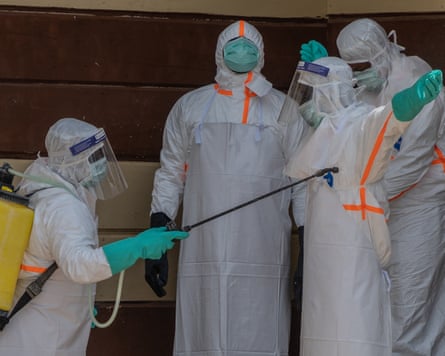
Responders are racing to contain the virus, which has caused 136 deaths from 676 confirmed cases in the DRC as of 10 June, according to a government report. In Uganda, it had caused two deaths from 19 confirmed cases as of 6 June, according to WHO.
The DRC report also noted that the outbreak in the country had spread to three new health zones – all in North Kivu and Ituri provinces.