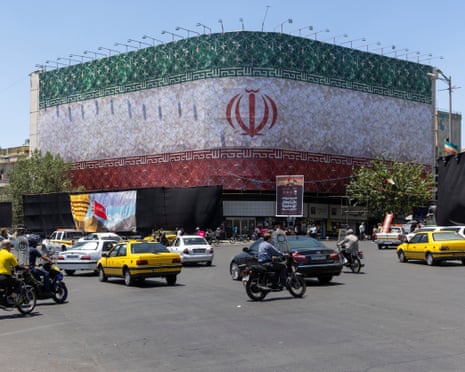
When Donald Trump launched his war against Iran in late February, he had ambitious goals: to topple Iran’s theocratic regime, destroy its military capabilities and nuclear program, and instigate a popular uprising by Iranians. A week into the war, Trump said he would only accept Iran’s “unconditional surrender.” On Sunday, Trump settled for a deal that reopens the Strait of Hormuz.
The US president celebrated having solved a problem he had created: reopening a vital waterway through which more than a fifth of the world’s oil supply passed each day – before Iran effectively closed it at the start of the war, increasing energy prices and disrupting the global economy. “Ships of the World, start your engines,” Trump wrote on social media in announcing the latest deal. “Let the oil flow!”
This is not a typical case of Trump making grandiose claims, declaring victory and moving on to his next obsession. Trump cornered himself by starting a war of choice, along with Israel, aimed at regime change in Tehran. But Iran withstood weeks of intense bombing by two of the world’s most powerful militaries, and its rulers emerged more defiant and with greater leverage than they had before the conflict. The regime turned its geographic proximity to the Strait of Hormuz into a new weapon that allows it to disrupt shipments of not just oil and liquefied natural gas, but fertilizer and other key agricultural products that could instigate global food shortages. Iran knows it cannot fight a head-on battle with the US military, but Trump showed its leaders that they could hold the world’s economy hostage.
And the much-hyped deal, which is expected to be formally signed on Friday in Geneva, does not end the war. It is essentially a 60-day extension of a ceasefire that was reached between Iran and the US on 8 April, but did not lead to the reopening of the Strait of Hormuz because Trump then imposed a naval blockade against Iranian ships in the region. Several rounds of negotiations also stalled over multiple violations of the ceasefire, and as Trump wavered between making a deal and issuing threats to restart the war.
While the final text of the latest agreement has not yet been released, it once again deferred the most difficult questions to future negotiations. Those talks are supposed to conclude within 60 days of the deal’s signing on 19 June, but they are likely to continue for months, if not years. In other words, Trump and Iran bought at least two months of breathing space for diplomacy to resolve what bombing could not. And while neither Trump nor Iran’s leaders have an interest in resuming an all-out war, there is no guarantee that the two sides will not fight another round.
The unresolved questions are daunting – and they are the same ones that faced US and Iranian negotiators during their last round of talks in Geneva, held 48 hours before Trump launched the war on 28 February. Those negotiations, which were mediated by Oman, involved the Iranian foreign minister, Abbas Araghchi, and two of Trump’s most trusted advisers: his special envoy to the Middle East, Steve Witkoff, and his son-in-law, Jared Kushner. The UK’s national security adviser, Jonathan Powell, also attended the talks, although it is unclear if he participated directly. Sources told the Guardian that Powell found Iran’s offer to curtail its nuclear program “surprising” – and significant enough to continue negotiations and avoid a rush to war.