A messy war in the Middle East. Tensions in Taiwan. When the leaders of the world’s two superpowers met in Beijing this week, these were the flashpoints everyone expected they would talk about.
Instead, Chinese leader Xi Jinping threw another, ancient war, into the mix.
In his opening remarks on Thursday, Xi made reference to the Peloponnesian War in ancient Greece, a decades long conflict that erupted between Athens and Sparta in 431BC.
In a shot across the bow of hegemonic rivalry, Xi asked:
“Can China and the United States transcend the so-called ‘Thucydides Trap’ and forge a new paradigm for major-power relations?”
What is the Thucydides Trap?
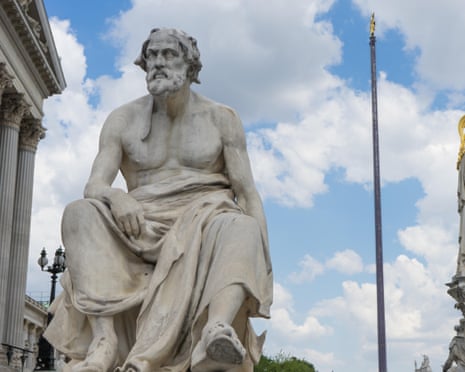
A staple of foreign policy commentary, including by Trump’s former chief strategist Steve Bannon, the Thucydides Trap refers to the idea that when a rising power threatens to displace an established one, the result is often war.
“It was the rise of Athens and the fear that this instilled in Sparta that made war inevitable,” Thucydides wrote in his book, the History of the Peloponnesian War.
Just as Athens once warred with Sparta, the implication is that China’s rise provokes anxiety and potential conflict with the US.
Observers have noted that Xi has used the term for years, but deploying the classical reference during Trump’s visit may be have been a foreshadowing of his position on Taiwan.
The Chinese leader later warned Trump that any missteps on Taiwan could push their two countries into “conflict”.
“The Taiwan question is the most important issue in China-US relations,” Xi said, of the self governing island that China claims as its own.