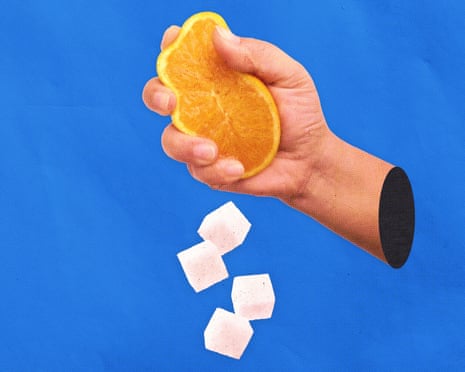
Many people try not to eat too much sugar, yet it is added to so much food and drink, it is hard to avoid. It goes by more than 50 different names on labels, is present even in seemingly savoury products and the alternatives are confusing and controversial. So is the sweet stuff addictive – and should you cut it out completely?
What exactly is sugar?
We’re all familiar with the stuff you put in your tea or coffee – table sugar (sucrose), made from refined sugar cane or sugar beet. But sugar is a broader term for a simple carbohydrate found naturally in fruits and some vegetables (fructose, glucose and sucrose), dairy products (lactose) and malted grains (maltose).
Is it bad for me?
Not in whole foods such as fruit, veg, milk and plain yoghurt. “These foods offer so many nutrients that are important for overall health,” says Sammie Gill, a senior scientist at the British Nutrition Foundation (BNF). “Fruit has vitamin C, fibre and phytochemicals and milk contains calcium, protein and vitamin B12. You can’t compare a piece of fruit to a bag of sweets or a glass of milk to a can of cola.” Most of us would benefit from more fruit in our diets, not less.
So what kind of sugar should I limit?
“Free” sugars, which means all sugars added by the manufacturer, the cook or the consumer. The usual suspects are fizzy drinks, biscuits, cakes and chocolate.
That seems pretty obvious.
It also includes alcoholic drinks, fruit juices and smoothies (free sugars are released during the juicing process), many breakfast cereals, flavoured yoghurts, sauces and condiments, and a host of other processed food. Or anything with a label featuring the words syrup, nectar, molasses, treacle, words ending in “ose”, such as dextrose, fruit juice concentrate/puree, honey …